Not every AI tool delivers the ROI it promises. This post focuses on the AI services that reliably save businesses money, with realistic costs, payback timelines and guidance on where budgets tend to go to waste.
Short answer: Which AI services for business actually produce measurable savings?
Only a handful of AI services for business reliably save money. They fall into three categories: customer service chatbots that cut support headcount and response times, task automation that removes repetitive admin and data entry, and reporting tools that reduce the need for a dedicated analyst. Each one targets a process you are already spending real money on.
That last point matters more than the technology itself. Automating a task that barely costs you anything is a distraction. The savings only count where genuine expenditure already exists, so the right starting question is never "what can AI do?" but "where are we spending the most time and money on work a machine could handle?"
Which AI tools actually save businesses money? Chatbots, automation and reporting compared
Three types of AI tool have a strong, documented track record of delivering measurable payback for SMEs and mid-market businesses.
Tool type | What it replaces | Typical payback | Best fit |
|---|---|---|---|
Customer service chatbot | Frontline support staff handling routine queries | 2–4 months (SMEs) | High-volume, repetitive enquiries |
Workflow automation (RPA / custom) | Manual data entry, order processing, invoice handling | 6–18 months | Standardised, rules-based processes |
Reporting / decision-support | Manual report building, ad-hoc data analysis | Varies by scope | Teams spending hours compiling spreadsheets |
Chatbots tend to show returns fastest because they directly offset the cost of human agents on repetitive queries. Industry data aggregated by DemandSage suggests chatbots cut customer service costs by 30 to 40% by handling routine enquiries that would otherwise require a person. Workflow automation takes longer to pay back but often delivers the largest absolute savings, particularly where a process touches multiple systems. Reporting tools sit somewhere in between. They can save significant analyst time, but the ROI depends heavily on how much manual reporting you are currently doing.
How long before an AI chatbot pays for itself? Typical investment and payback timeline
For most small and mid-sized businesses, a customer service chatbot reaches positive ROI within 2 to 4 months. Larger enterprise rollouts, with more complex integrations and approval cycles, typically take 6 to 9 months to pay back, according to industry data from Forrester and Capterra.
The speed of payback depends on three things. First, your current support volume. Second, the proportion of queries the chatbot can resolve without human help. Third, the fully loaded cost of the staff it offsets. A business fielding hundreds of repetitive queries a week will see returns far faster than one with a small, specialist support team.
On the cost side, Gartner estimates conversational AI will reduce contact centre labour costs by $80 billion by 2026. That is a global figure, but it reflects the scale of savings available even at an individual business level. A well-scoped chatbot for an SME might cost a few thousand pounds to build and deploy. The investment is modest relative to the ongoing salary cost it displaces.
We've built chatbot and conversational AI tools as part of our AI automation work. The pattern is consistent: the businesses that see the fastest payback start with a clear, measurable problem, such as "we spend X hours a week answering the same five questions."
How much does business process automation cost? Realistic ranges and what determines price
Costs range from a few thousand pounds for a single-process build to tens of thousands for a multi-system project. The price is shaped by the number of systems involved, the complexity of the data, and whether you need custom integrations or API adapters to connect legacy platforms.
A straightforward automation, for example pulling data from one system, transforming it and pushing it into another, sits at the lower end. A project that touches a CRM, an ERP, a legacy database and a reporting layer will cost more and take longer to scope. We connect CRMs, ERPs and legacy platforms via APIs and custom adapters rather than forcing a migration. That keeps costs down but still requires careful scoping.
Payback for automation projects typically falls in the 6 to 18 month range, depending on the volume of work being replaced. The clearest wins come from processes that are high-volume, rules-based and currently handled by staff who could be redeployed to higher-value work. If you're unsure where to start, an AI feasibility consultancy engagement can map your existing processes, estimate the cost of each one and recommend which to automate first.
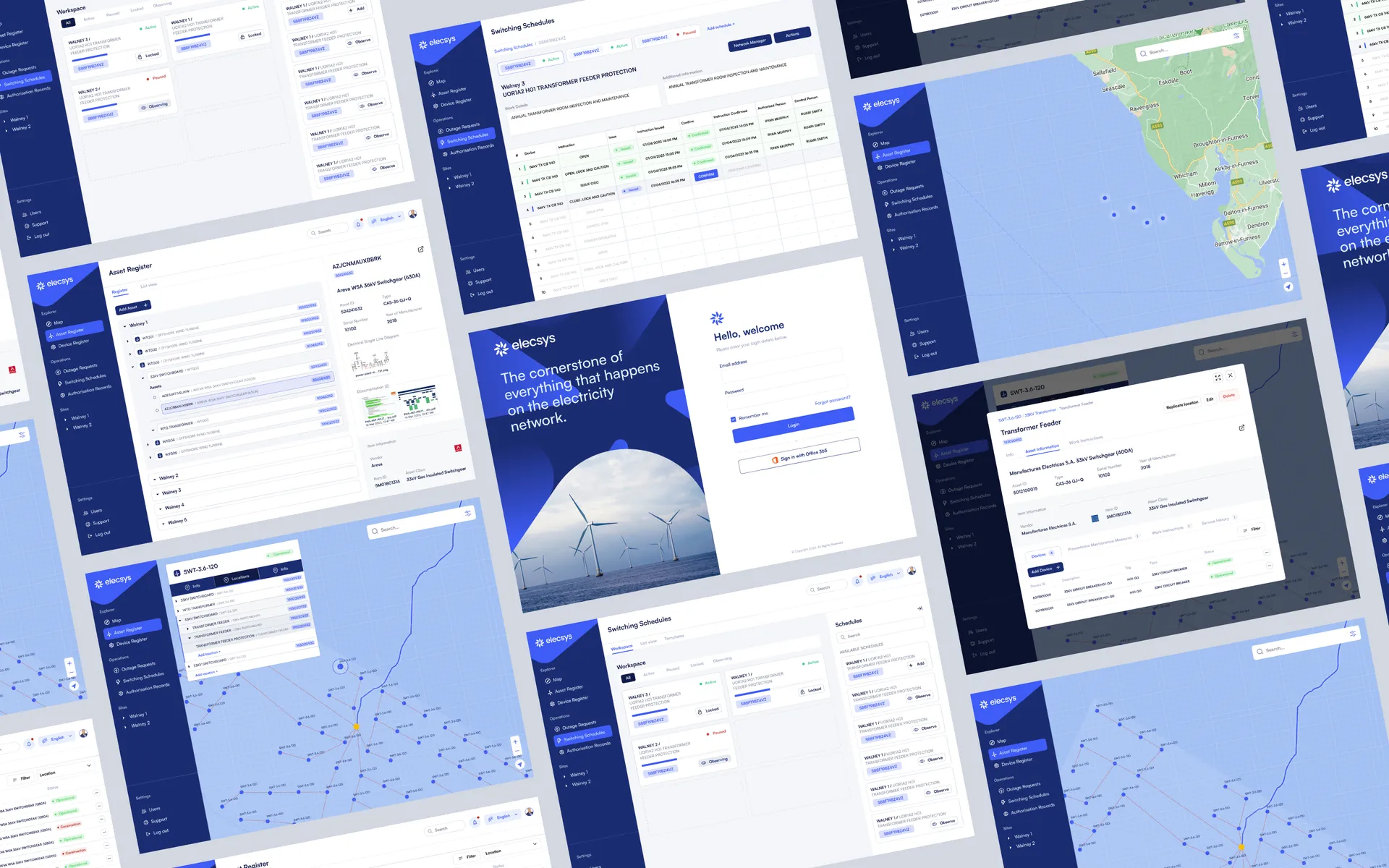
For Elecsys, we built a platform that brought together data capture and reporting across their operations, replacing manual processes with automated workflows. Each manual step removed reduces both time and the risk of human error.
When do reporting and decision-support tools replace a data analyst (and when don't they)?
They work well when your reporting needs are structured and repetitive. Weekly dashboards, monthly KPI summaries, automated alerts when a metric crosses a threshold. They're less effective when your analysis requires creative interpretation or domain expertise that changes from question to question.
The practical test is straightforward. If someone on your team spends several hours a week pulling the same data from the same sources and formatting it into the same report, that's a strong candidate for automation. We build real-time data platforms with dashboards, reporting and automated workflows that handle exactly this kind of structured, repeatable work.
A dashboard can surface a trend. Deciding what to do about it still requires a person who understands the business context. The sweet spot is using automated reporting to free up your most capable people so they spend their time interpreting data rather than compiling it.
Why do most AI projects fail to show ROI? Common traps and how to avoid them
They're bought without a clearly defined problem to solve. The tool arrives before anyone has asked what it should measurably improve. Deloitte's 2022 Global Intelligent Automation survey found that organisations rate their automation maturity at just 5.04 out of 10, up from 4.41 in 2020 but still well below where implementers and scalers sit (averaging 5.96).
The most common traps we see:
A tool gets purchased and then a use case is found for it, rather than starting from a costly process and finding the right tool.
Goals are set as vague ambitions like "improve efficiency" with no baseline and no target number.
The pilot runs in a low-cost area where the savings, even if real, are too small to justify the investment.
A successful pilot never reaches production because no one planned for integration, training or change management.
The fix is unglamorous but effective. Start with a process audit. Identify what your team actually spends time and money on, put a number against each task, and only then ask whether AI or automation is the right solution. Our approach at Myth always begins with scoping and feasibility before any code is written. The most expensive AI project is the one that solves a problem you don't have.
Where should a business start with automation? A practical quick-win audit to prioritise projects
Pick the process that is simultaneously high-cost and low-complexity. That combination gives you the fastest, most visible payback and builds internal confidence for larger projects later.
Here is a simple audit you can run this week:
List every repetitive task your team performs daily or weekly. Include data entry, report generation, order processing, invoice handling, email triage and anything else that follows a predictable pattern.
Estimate the annual cost of each task. Multiply the hours spent per week by the fully loaded hourly cost of the person doing it, then multiply by 52.
Score the complexity of automating each task on a scale of 1 to 5. A score of 1 means a single system with clean data. A 5 means multiple legacy systems with inconsistent formats.
Rank by the ratio of annual cost to complexity. The tasks at the top of that list are your quick wins.
For our clients we take a similar approach: identifying the operational processes that were consuming the most time, then building custom software to handle them. The principle is the same regardless of industry. Start from the work that already happens every day, put a number on it, and automate the expensive, simple stuff first.
If you're not sure where the biggest savings sit, or you want a second opinion on what's worth automating, we run exactly this kind of assessment as part of our AI feasibility consultancy. It's a short, structured engagement that gives you a prioritised list of projects, estimated costs and realistic payback timelines before you commit to building anything. Get in touch and we'll walk through it with you.
Frequently asked questions
Which AI tools actually save businesses money?
Three categories consistently deliver measurable savings: customer service chatbots that reduce support headcount and response times, workflow automation that removes repetitive admin and data entry, and reporting tools that turn raw data into decisions without a full-time analyst. The key is choosing tools that target an existing, costly process rather than automating something that barely costs you anything.
How long before an AI chatbot pays for itself?
Small and mid-sized businesses typically see positive ROI within 2 to 4 months of deploying a chatbot, while larger enterprise rollouts take 6 to 9 months. Payback depends on your current support volume, the proportion of queries the chatbot can handle, and how much you currently spend on frontline support staff.
How much does business process automation cost?
Costs vary widely. A single-process automation might start from a few thousand pounds, while a multi-system project connecting CRMs, ERPs and legacy platforms can run into tens of thousands. The biggest cost drivers are the number of systems involved, data complexity and whether custom integrations or API adapters are needed.
Why do most AI projects fail to show ROI?
The most common reason is buying a tool without a clearly defined problem to solve. Organisations often pilot AI in areas with low existing costs, set vague success metrics, or fail to move pilots into production. Deloitte's 2022 survey found most organisations still rate their automation maturity at just 5 out of 10.
Where should a business start with automation?
Start by auditing the work your team does every day and identifying the tasks that are repetitive, high-volume and already costing you real money in staff time or errors. Rank those tasks by annual cost and complexity, then pick the simplest, highest-cost process as your first project. That gives you the fastest, most visible payback.
Can a small business afford AI services for business?
Yes, provided you scope carefully. A focused chatbot or a single-process automation can cost a few thousand pounds and pay for itself within months. The mistake is over-scoping: trying to automate everything at once drives costs up and delays any return. Start small, prove the savings, then reinvest.
How should I measure ROI on an AI project?
Define your baseline before you build anything: how many hours does the current process take, what does it cost in staff time, and what is the error rate? After deployment, measure the same figures monthly. Good metrics include hours saved per week, reduction in support tickets handled by humans, and cost per transaction before and after.