Most business 'AI failures' aren't caused by the models. They're caused by planning. Here are the five repeatable missteps we see and the practical fixes that stop them draining your budget.
The most common AI implementation mistakes have nothing to do with the models. They're caused by planning. Teams rush in without a clear problem, feed messy data into tools, skip review, overlook compliance, and end up with five overlapping subscriptions and no strategy.
RAND Corporation's 2024 study found over 80% of AI projects fail to deliver their intended business value, roughly double the failure rate of comparable non-AI IT projects. The good news: every one of these missteps is fixable, and most of the fixes are about process, not technology.
This post covers the five mistakes we see most often across UK SMEs and pairs each one with a practical fix you can act on this week.
Short answer: most AI 'failures' are planning failures, the 5 avoidable missteps to fix now
Projects that stall or waste budget almost always do so because the groundwork was missing, not because the model underperformed. MIT's Project NANDA (The GenAI Divide, 2025) found 95% of organisations deploying generative AI saw zero measurable financial return. The root cause was poor workflow integration rather than model quality. The pattern repeats across sectors and company sizes.
The five avoidable missteps are:
Rushing in without a clearly defined problem to solve
Feeding poor-quality or unstructured data into AI tools and expecting reliable output
Skipping human review of AI-generated work
Underestimating data privacy and compliance obligations
Accumulating overlapping AI subscriptions with no governance (tool sprawl)
Let's get into them.
Why do teams rush in, and how do you prove you have a real AI problem?
The pressure to 'do something with AI' is real, from boards, investors and competitors alike. But starting without a specific, measurable problem to solve is the single most reliable way to waste budget. O'Reilly's November 2023 survey found that while 67% of companies were using generative AI, only 18% had applications in production. That gap is largely a planning gap.
Before you commit money to any AI tool or vendor, Start to consider these questions:
Can you describe the problem in a few sentences?
Can you measure the current state (hours spent, error rate, cost per task)?
Would solving this problem matter even if the solution turned out to be non-AI?
If you can answer yes to all three, you likely have a genuine use case. If not, you may have a solution looking for a problem and that's where budgets go to die. Our AI feasibility consultancy work starts here: scoping the use case before anyone writes a line of code.
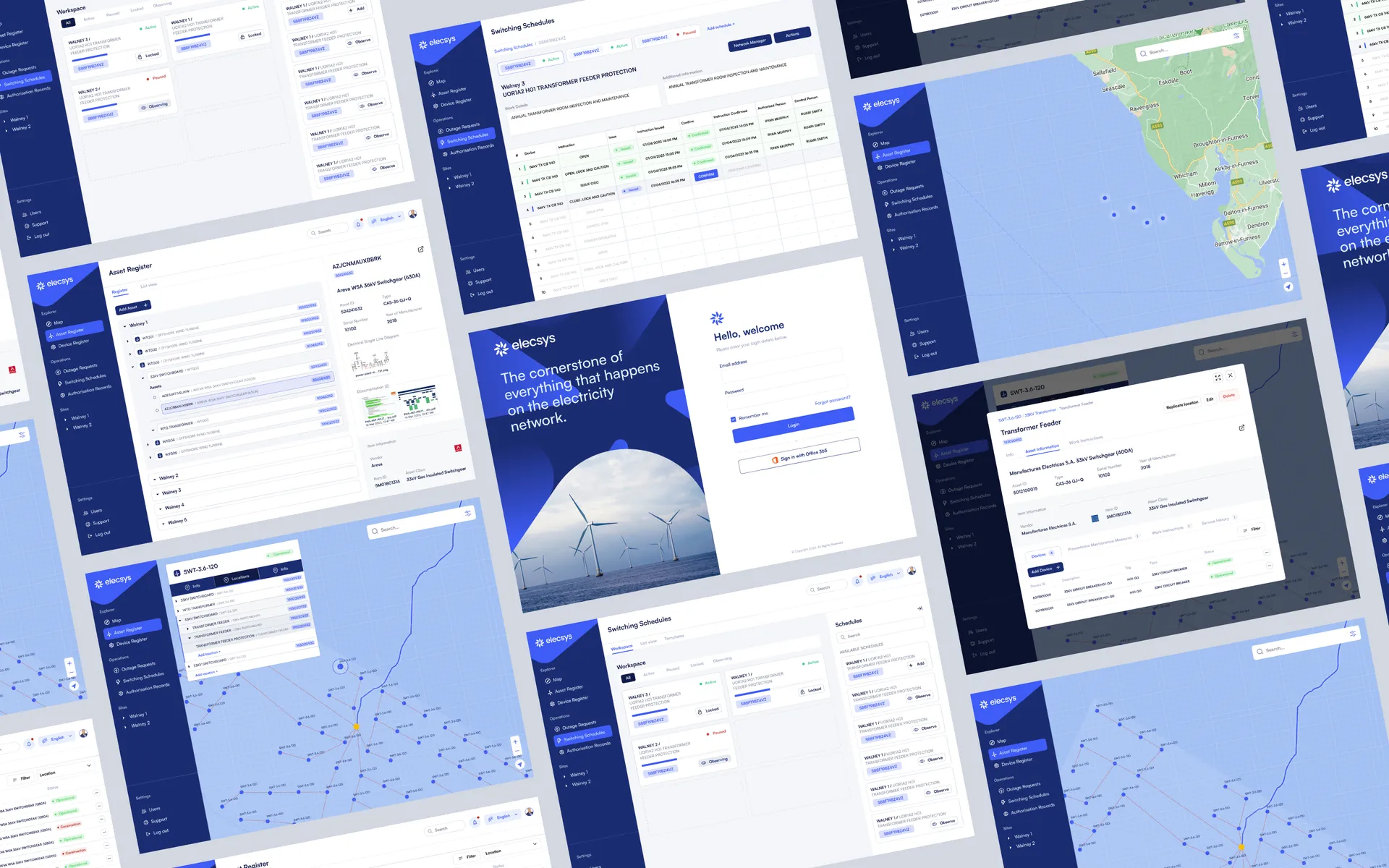
When we worked with Elecsys, the starting point was a defined operational problem, not a vague ambition to 'use AI'. That clarity shaped every decision that followed and kept the project focused on measurable outcomes.
How important is data quality for AI? Practical fixes for messy and unstructured data
Picture this; your sales team exports a customer list from the CRM, pastes it into a spreadsheet, tweaks a few names by hand, then feeds the lot into a shiny new AI tool. The output is nonsense. Not because the model failed, but because the same customer appeared three times under slightly different names, half the postcodes were missing, and the date formats switched between US and UK halfway through.
That scenario plays out constantly. A model is only as reliable as the data it works with, and SMEs tend to have data scattered across spreadsheets, CRMs, email threads and legacy systems that have never been consolidated.
Practical fixes you can start now:
Audit your data sources before choosing any AI tool. Map where data lives, who owns it and how consistent it is.
Deduplicate and standardise key fields (customer names, product codes, dates) before feeding anything into a model.
Establish a single source of truth for each data type. If your CRM and your spreadsheet disagree, decide which wins and enforce it.
For unstructured data like free-text notes, PDFs and emails, consider whether extraction and structuring is a prerequisite step before AI can add value.
We've seen projects where a fortnight of data cleaning delivered more value than the AI tool itself. If your data sits across disconnected systems, unifying those systems is often the real first step.
Do I need human review of AI-generated work? When to use human-in-the-loop and how to design review workflows
Yes. AI-generated outputs, whether text, code, data analysis or customer communications, can contain factual errors, hallucinations, bias and compliance risks that automated checks alone won't catch. Skipping review is one of the fastest ways to damage trust with customers or regulators.
The question isn't whether to review. It's how to design a review workflow that doesn't become a bottleneck.
A practical human-in-the-loop workflow looks like this:
Assign a named reviewer for each AI-powered process. Not a committee. One person with clear accountability.
Build confidence scoring into your AI outputs. Our automation work ships with validation and confidence scoring built in, so low-confidence outputs are automatically routed to human review rather than going straight to production.
Define which outputs are high-risk (customer-facing content, financial calculations, anything touching personal data) and require sign-off before release.
For lower-risk outputs like internal summaries or draft categorisations, a spot-check regime may be enough. Review a random sample weekly rather than every item.
The goal is proportionate oversight, not a rubber stamp and not a bottleneck. When we build AI automation workflows for clients, the review layer is designed in from the start.
Which data privacy and compliance errors sink AI projects? A GDPR/UK checklist teams can use today
Privacy mistakes can turn a promising AI project into a regulatory liability overnight. Under UK GDPR, automated decision-making that affects individuals carries specific obligations around transparency, lawful basis and the right to human intervention. Many teams only discover this after they've already processed personal data through a third-party AI tool.
O'Reilly's survey found that privacy, security, and unexpected outcomes were among the biggest risks organisations are testing for when adopting generative AI. But testing for risk isn't the same as mitigating it.
Here's a checklist your team can use before any AI project touches personal data:
Confirm your lawful basis for processing under UK GDPR (consent, legitimate interest or another basis) and document it.
Complete a Data Protection Impact Assessment (DPIA) if the processing is likely to result in high risk to individuals.
Check where your data goes. If you're using a third-party AI API, understand where data is stored, whether it's used for model training and whether it leaves the UK.
Ensure individuals can request a human review of any automated decision that significantly affects them.
Maintain records of processing activities, including which AI tools are used, what data they access and who has access.
For teams working in regulated sectors, we've written a more detailed guide on building compliant AI prototypes that covers FCA, NHS Digital and GDPR requirements at the prototype stage. We build and host on Microsoft Azure, which meets UK data-protection requirements. That hosting decision is part of the compliance picture from day one.
What is AI tool sprawl and how do I avoid it? A consolidation and governance playbook for SMEs
One team signs up for a writing assistant. Another picks a meeting transcription tool. A third adds a data analysis add-on. Six months later you're paying for five tools that partially duplicate each other, with data scattered across all of them and nobody sure who authorised what.
This is tool sprawl, and it's particularly common among UK SMEs where individual team members can sign up for SaaS tools on a company card without any formal approval process. The costs aren't just financial, though those add up quickly. Sprawl also creates security blind spots, fragments your data and makes it nearly impossible to build a coherent AI strategy.
So how do you rein it in? Start with a quarterly AI subscription audit. List every AI tool the business pays for, who uses it, what it does and what data it accesses. Assign ownership: every tool should have a named person responsible for renewals, data access and compliance. Where features overlap between two tools, pick one and cancel the other.
Before approving any new subscription, require a brief justification. What problem does it solve? Does an existing tool already cover it? What data will it access? Feed findings into your broader AI strategy. Tool choices should support a plan, not drive it.
When we work with clients like AlphaVictor and Juice Jar, part of the value is helping them avoid this fragmentation from the start. We choose the right tools for the actual problem rather than layering subscriptions reactively.
A 6-step pre-budget sense-check: validate value, risk and vendor fit before you commit money
Before you sign a contract or allocate budget to any AI initiative, run through these six steps. They take less than a day and can save months of wasted effort.
Define the problem without mentioning AI. If the problem statement only makes sense as an AI project, you may be solving for technology rather than business value.
Measure the baseline. How long does the task take now? What's the error rate? What does it cost? Without a baseline, you can't measure improvement.
Audit your data readiness. Is the data clean, structured and accessible? If not, factor data preparation into your timeline and budget.
Map compliance obligations. Does the project touch personal data? Does it involve automated decisions that affect individuals? If yes, complete a DPIA before you start.
Check for tool overlap. Does an existing subscription already cover part of this use case? Could a configuration change to an existing tool solve the problem without a new vendor?
Run a time-boxed pilot. Test the approach on a small, contained dataset with clear success criteria before committing to a full rollout. Measure against your baseline.
This is the approach we take in our AI consulting work: scope the problem, validate the data, check the compliance picture and pilot before you scale. Most teams skip it.
If you're weighing up an AI investment and want a second opinion before you commit budget, get in touch for a sense-check conversation. We'll tell you honestly whether the project is ready to move forward or whether there's groundwork to do first. No pitch, just practical advice from a team that's been building AI systems since well before the current hype cycle.
Frequently asked questions
Why do most AI projects fail?
Most AI projects fail because of planning problems, not model quality. RAND Corporation's 2024 study found over 80% of AI projects fail to deliver intended business value. Common root causes include unclear problem definitions, poor data quality, missing human review, compliance oversights, and uncontrolled tool sprawl rather than flawed algorithms.
What are the most common AI implementation mistakes?
The five most common AI implementation mistakes are rushing in without a defined problem, feeding poor-quality or unstructured data into AI tools, skipping human review of outputs, ignoring data privacy and GDPR obligations, and accumulating overlapping AI subscriptions with no governance. Each is avoidable with upfront planning.
How important is data quality for AI?
Data quality is critical. AI models trained or prompted with inconsistent, duplicated, or poorly structured data produce unreliable outputs regardless of how sophisticated the model is. Cleaning, deduplicating, and structuring your data before any AI project begins is one of the highest-return investments an SME can make.
Do I need human review of AI-generated work?
Yes. Human-in-the-loop review catches factual errors, bias, and compliance risks that automated systems miss. For regulated sectors and customer-facing content, human sign-off is essential. Design a lightweight review workflow that routes low-confidence AI outputs to a named reviewer before anything reaches production.
What is AI tool sprawl and how do I avoid it?
AI tool sprawl happens when a business accumulates multiple overlapping AI subscriptions with no central strategy. It wastes budget, fragments data, and creates security blind spots. Avoid it by auditing existing subscriptions quarterly, assigning ownership of each tool, and consolidating where features overlap.
How should an SME start an AI project without wasting budget?
Start with a single, well-defined problem where you can measure improvement, such as hours saved or error reduction. Run a short pilot with clear success criteria before committing to a full rollout. A discovery session or AI feasibility review helps validate the use case and vendor fit before any significant spend.