Vibe coding lets founders build demos fast by prompting an AI, but it's no substitute for production-grade engineering. Here's how to tell when a prototype needs professional AI-assisted development, and what that transition actually looks like.
Short answer: when vibe coding is OK, and when to stop
Vibe coding is a fast, effective way for founders to test ideas, build demos and get something tangible in front of investors. It is not a trustworthy route to secure, scalable production software. For production you need professional AI-assisted development: engineers using AI as a tool inside disciplined architecture, security and CI/CD practices so the product can handle real users and real money.
The two approaches look similar on the surface. Both use AI to generate code. The difference is what happens next: who reviews the output, how it is structured, and whether anyone has thought about what breaks when 10,000 people use it at once.
If you are at the idea stage, vibe coding can save you weeks. If you are about to accept payments, store personal data or onboard your first real customers, it is time to stop and bring in engineers.
What is vibe coding? A precise definition and common workflows
You describe what you want in plain language and an AI tool generates the code for you. The term was coined by Andrej Karpathy in early 2025 and quickly spread from developer circles into boardroom conversations. The person prompting the AI does not necessarily read or understand the code that comes back. They accept it, run it, see if it works, and iterate.
Common workflows look like this:
A founder opens a tool like Cursor, Replit Agent or ChatGPT and describes a feature in everyday English.
The AI returns working (or nearly working) code.
The founder pastes errors back into the prompt until the output runs.
The cycle repeats, feature by feature, until there is something demonstrable.
This works well for quick prototypes, internal tools that only you will use, and investor demos where the goal is to communicate an idea rather than serve live customers. GitHub's own research found that developers using Copilot perceived they completed tasks faster. A controlled experiment showed a higher task completion rate (78% vs 70%) for the Copilot group.
The speed is real. The question is what you are trading for it.
Is vibe coding safe for production software? The top risks you'll meet
Not without significant additional engineering work. The code AI generates can look correct, pass a surface-level test and still contain serious vulnerabilities. SonarSource's State of Code Developer Survey found that 53% of developers who shipped AI-generated code later discovered security issues only after it reached production. An academic study by NYU researchers found that approximately 40% of programs generated by Copilot in security-relevant scenarios contained vulnerabilities.
The most common risks we see when reviewing vibe-coded prototypes:
Hardcoded API keys and credentials sitting in the source code, sometimes pushed to public repositories.
No input validation, leaving the app open to injection attacks.
Fragile data models that work for five test records but collapse or corrupt data at scale.
Missing authentication and authorisation logic, or logic that exists but is trivially bypassable.
Zero automated tests, meaning any change can silently break something elsewhere.
Perhaps the most telling statistic: 96% of developers do not fully trust AI-generated code to be functionally correct, yet only 48% always review it before committing. That gap between distrust and actual review is where production incidents live.
If you are handling customer data, processing payments or operating in a regulated sector, these are not theoretical concerns. They are compliance failures waiting to happen.
Can you build a real app with AI alone? The technical and business realities
You can build a convincing demo. You cannot build a reliable, maintainable product that serves paying users without experienced engineering input. The distinction is important for founders weighing their options.
AI tools are excellent at generating individual functions, UI components and boilerplate code. They are poor at the connective tissue that makes software hold together over time. Choosing the right database schema, designing an authentication model, structuring code so a second developer can understand it six months later, setting up the deployment pipeline that gets changes safely from a developer's machine to a live server: these all require human judgement.
From a business perspective, the risks multiply:
Investors increasingly ask about technical due diligence. A codebase with no tests, no architecture documentation and no version control history is a red flag.
Compliance frameworks like GDPR and PCI DSS require you to demonstrate data protection by design, not just that the app appears to work.
Customer trust is hard to win back after a data breach or extended outage.
AI is a brilliant accelerator, not a replacement for the people who know how to use it responsibly. That is the core of what separates prototyping for startups from building a product that can sustain a business.
What is the difference between vibe coding and AI-assisted development?
The tools are the same. The process wrapped around them is completely different. Both use AI to generate code. Professional AI-assisted development adds the engineering discipline that turns raw output into something you can trust.
Vibe coding | Professional AI-assisted development | |
|---|---|---|
Who writes prompts | Founder or non-technical user | Experienced engineer |
Code review | Minimal or none | Every AI suggestion reviewed before merge |
Architecture | Emergent (whatever the AI produces) | Planned: data model, API contracts, service boundaries |
Testing | Manual, ad hoc | Automated unit, integration and end-to-end tests |
Security | Unaudited | Threat modelling, dependency scanning, secrets management |
Deployment | Manual or single-click hosting | CI/CD pipeline with staging environments |
Maintainability | Low: tightly coupled, undocumented | High: modular, documented, version-controlled |
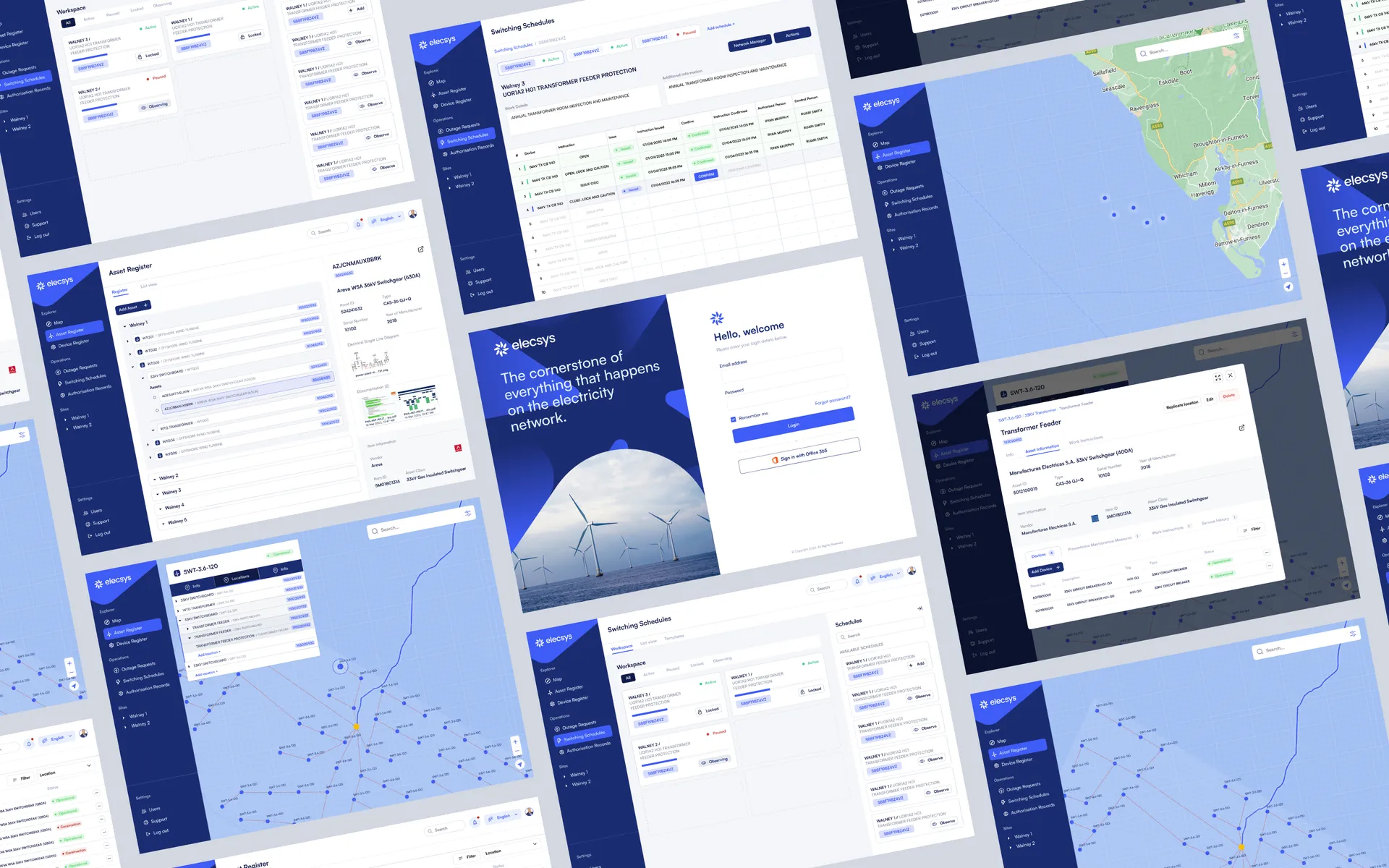
Our team uses AI tools daily. The difference is that every suggestion passes through the same review cycle as human-written code. When we built the Elecsys platform, the architecture decisions made early on, data models, API structure, offline sync capability, were exactly the kind of choices AI cannot make on its own. Those decisions determined whether the product could handle field engineers capturing data in locations with no connectivity and syncing reliably when back online.
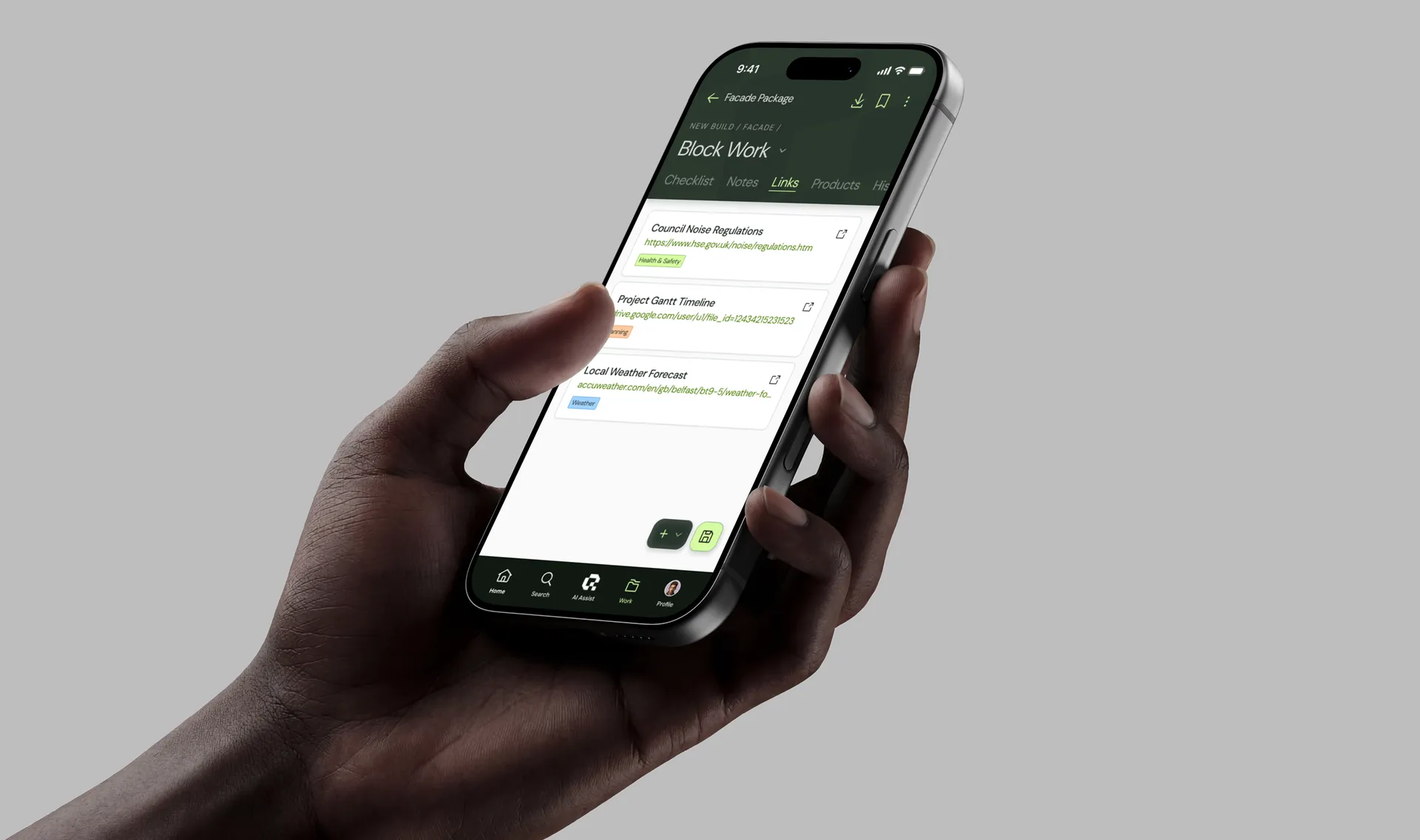
When we worked with Juice Jar, the path from early concept to a product real customers could use involved deliberate MVP development for startups. That meant scoping the core features, building automated tests, and deploying through a proper pipeline on Microsoft Azure.
AI made parts of the build faster. Engineering made the whole thing work.
When should a prototype be rebuilt properly: practical signals and timing
Rebuild when the prototype is about to bear weight it was never designed for. The signals are practical, not abstract:
Real users (not just you and your co-founder) are about to depend on the product.
You are collecting personal data, processing payments or operating under regulatory requirements.
Adding a small feature keeps breaking something unrelated. That's a sign of tightly coupled code with no test coverage.
An investor or partner has asked for a technical review and you know the codebase will not survive one.
You need a second developer to work on the product and they cannot understand what the first round of AI output actually does.
Timing matters. Rebuilding too early wastes the prototype's purpose: fast learning. Rebuilding too late means you are patching a fragile system under pressure, which costs more and takes longer than starting the production build when the signals first appear.
The prototype has done its job if it proved the idea has legs. Now it needs proper foundations. That transition is something we handle regularly, taking a working demo through an architecture review and into a phased production build. If you are weighing code versus low-code and no-code approaches, the same logic applies: the right tool depends on where you are in the product lifecycle.
How to move a vibe-coded prototype into production: a simple checklist
Moving from prototype to production is not about throwing everything away. It is about understanding what you have, deciding what to keep and rebuilding the rest with proper engineering practices. Here is the checklist our team works through:
Map the current codebase: what does it do, how is it structured, and where are the biggest risks? This tells you whether you are looking at a partial rewrite or a full rebuild.
Identify how the app handles authentication, data storage, third-party API keys and user input. Flag anything that would fail a basic security audit.
Check whether the database schema can handle production volumes and edge cases. Fragile data models are the single most common issue we find in vibe-coded prototypes.
Write unit and integration tests for core business logic before changing anything. Tests give you a safety net for every subsequent change.
Set up continuous integration and deployment so that code changes are built, tested and deployed through a consistent, repeatable process rather than manual uploads.
Move API keys, database credentials and tokens out of the source code and into a proper secrets manager.
Plan your hosting, scaling and monitoring. We build and host on Microsoft Azure, which meets UK data-protection requirements and gives you room to scale without re-platforming. If your prototype is running on a quick deployment service, migrating to a production cloud environment is a natural next step.
Document the architecture, key decisions and onboarding steps so that any engineer can pick up the project without reverse-engineering the entire codebase.
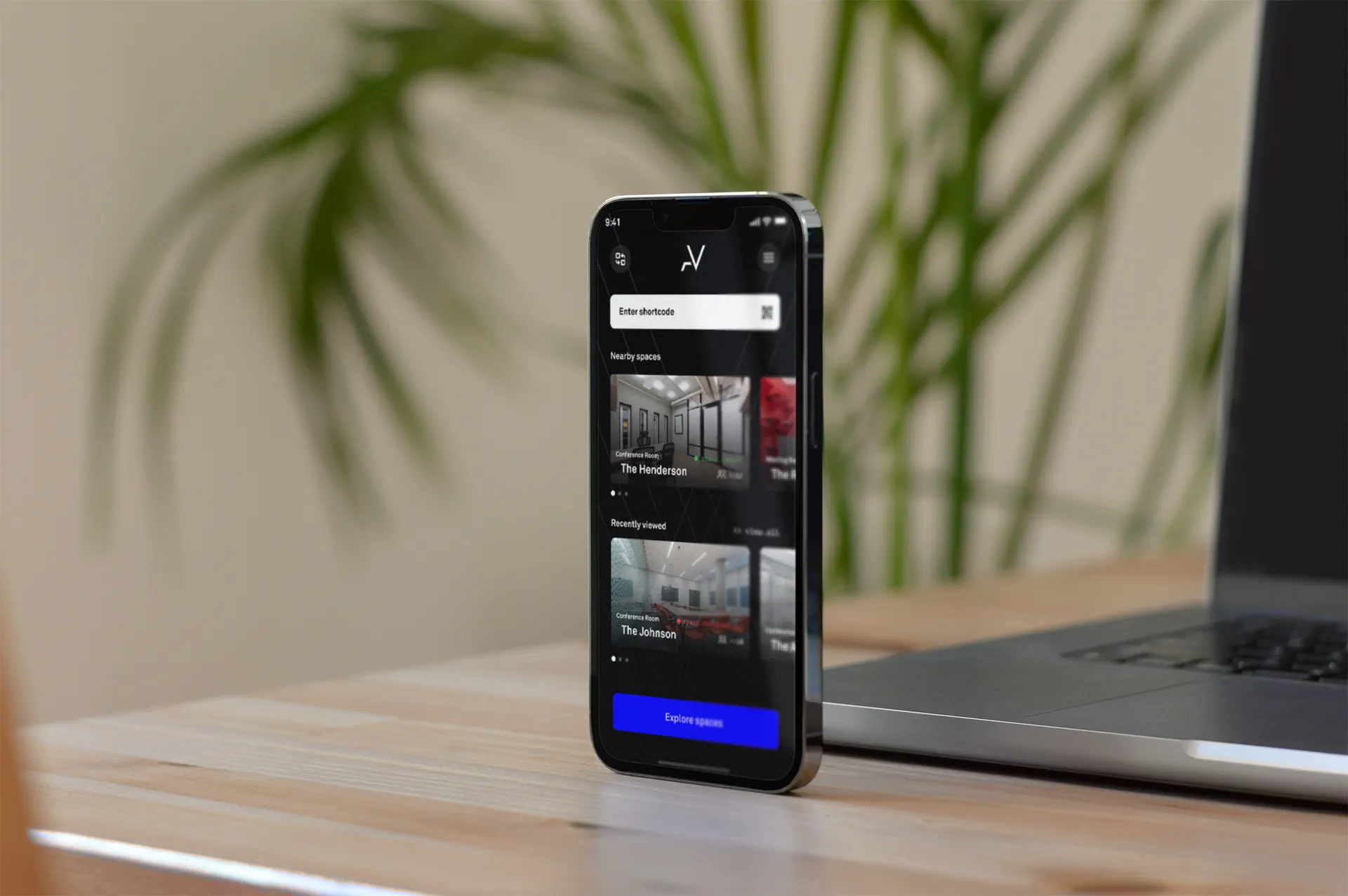
The scope depends on the complexity of your product, the state of the existing code and your compliance needs. For AlphaVictor, our team took a concept through discovery and into a production platform that facility managers rely on daily. For SeeMe Hired, the priority was getting a bespoke software product into users' hands quickly without sacrificing the architecture that would let it grow.
Every project starts with a discovery call and an exploration phase before any code is written. We scope, then propose, then build in phases so you see and sign off progress rather than waiting for a big reveal.
If you have a vibe-coded prototype that has proved its concept and you are ready to turn it into something production-ready, get in touch with our team. We'll review what you have, tell you honestly what needs to change, and map out a phased build that gets you to launch without starting from zero.
Frequently asked questions
What is vibe coding?
Vibe coding is a style of software creation where a person describes what they want in plain language and an AI tool generates the code. The user accepts, tests and iterates on the output without necessarily reading or understanding the underlying code. It is useful for rapid prototyping but not designed for production-grade software.
Is vibe coding safe for production software?
Generally, no. Research from SonarSource found that 53% of developers who shipped AI-generated code discovered security issues only after it reached production. Without expert review, threat modelling and automated testing, vibe-coded output often contains vulnerabilities, hardcoded credentials and fragile data models that create serious risk once real users and real money are involved.
Can you build a real app with AI alone?
You can build a convincing demo, but a real app serving paying users requires architecture decisions, security hardening, automated testing and CI/CD pipelines that AI tools do not provide on their own. AI accelerates individual coding tasks, yet it still needs experienced engineers to evaluate, structure and maintain the output over time.
What is the difference between vibe coding and AI-assisted development?
Vibe coding accepts AI output largely unchecked and prioritises speed over structure. Professional AI-assisted development uses the same AI tools but embeds them inside disciplined engineering practices: code review, architecture planning, automated tests, threat modelling and continuous integration. The engineer decides which AI suggestions to trust and which to rewrite.
When should a prototype be rebuilt properly?
Rebuild when real users are about to rely on the product, when you are handling sensitive data or payments, when the codebase resists even small feature changes, or when investors require security and compliance evidence. These signals mean the prototype has served its purpose and needs production-grade architecture.
How much does it cost to convert a vibe-coded prototype into production?
Costs vary widely depending on the product's complexity, the state of the existing code and your compliance requirements. A small, well-scoped rebuild might take a few weeks of engineering time, while a larger platform could require a full discovery phase and phased delivery. The best first step is an architecture review to understand the gap between prototype and production.