There's a persistent myth that custom software is only for big corporates with deep pockets. Cloud infrastructure, modular development and AI-assisted coding have changed the equation entirely, and an MVP-first approach now puts purpose-built tools within reach of ambitious SMEs.
Yes, custom software for SMEs is now affordable and practical. Advances in cloud hosting, modular development and AI-assisted coding have cut build time and cost significantly. An MVP-first approach lets small teams get usable, low-risk tools quickly. Over a two to three year horizon, purpose-built software often delivers better productivity and lower total cost than forcing your work into ill-fitting off-the-shelf systems.
That's not wishful thinking. The global custom software development market hit $44.2 billion in 2025 and is projected to reach $50.6 billion in 2026, with SMEs the fastest-growing segment as cloud and AI development tools lower the barrier to entry.
Is custom software only for big corporates?
This belief persists because it used to be largely true. A decade ago, building software to order meant months of requirements gathering, expensive on-premise server infrastructure and large development teams billing by the hour. The upfront cost could run well into six figures before a single user logged in. For a 30-person company, that was simply out of reach.
SMEs defaulted to commercial off-the-shelf software (COTS) and adapted their processes to fit the tool, rather than the other way around. Spreadsheets filled the gaps. Manual workarounds became embedded. The idea that custom software development was something only enterprises could justify hardened into received wisdom.
It's worth questioning that wisdom now.
What has changed to make custom software affordable for SMEs?
Three shifts have made the economics fundamentally different.
Cloud infrastructure has removed the capital barrier. Hosting a new application on a platform like Microsoft Azure (which we use for all our builds) means you pay for compute and storage as you go. There's no server room, no upfront hardware purchase, no dedicated IT team to manage it. For an SME, this turns a large capital expense into a predictable monthly cost that scales with actual usage.
Modular, component-based development speeds things up. Modern frameworks and well-maintained libraries mean developers aren't writing every feature from scratch. A secure authentication system, a notification service, a payment integration: these are assembled from proven components and customised to your needs. Delivery is faster and costs are lower without sacrificing quality, provided the team knows what they're doing.
AI-assisted coding tools are making developers measurably faster. Generative AI copilots are now writing up to 30% of new code, helping teams move faster and reduce total project costs. In a controlled experiment by Microsoft Research, developers with access to GitHub Copilot completed a programming task 55.8% faster than those without it. Separately, GitHub's own research found that between 60 and 75% of Copilot users reported feeling more fulfilled, less frustrated and better able to focus on satisfying work.
Those are vendor-led studies, so take the exact percentages with a pinch of salt. But the direction is clear. Our own team uses AI-assisted tools in our workflow automation and development process. The practical effect is real: less time on boilerplate, more time on the logic and design decisions that actually matter to your business.
One important caveat. AI-assisted coding lowers cost and accelerates delivery in the hands of experienced developers. Without that expertise, you get faster bad code. The tooling amplifies skill; it doesn't replace it.
What are the hidden costs of forcing your business into off-the-shelf software?
Off-the-shelf software looks cheaper at first glance. A monthly per-seat licence, maybe a setup fee, and you're running. But the real costs accumulate quietly over two to five years.
Per-seat licence fees compound as your team grows. Ten users at £50 a month is manageable. Fifty users across three tools is £60,000 a year before you've customised anything.
You change your processes to match the software, not the other way around. That means workarounds, manual data entry between systems and staff time spent on tasks the software should handle.
Integrations between multiple COTS tools are often fragile. When one vendor updates their API, something breaks. Fixing it is either expensive or impossible without the vendor's cooperation.
Data lives in someone else's ecosystem. Migrating away later can be painful and costly, and you're subject to the vendor's pricing changes.
Training costs are ongoing. Every time the vendor ships a major update, your team relearns the interface.
None of this means off-the-shelf is always wrong. For standard, well-defined tasks like email, document editing or basic accounting, it's often the best choice. But for the processes that are core to how your business operates and competes, the hidden costs of generic tools can exceed the cost of building something purpose-made.
Understanding what custom software development actually involves helps frame this comparison honestly.
What does an MVP-first, budget-conscious build actually look like?
The biggest misconception about custom software is that you have to build the whole thing before it's useful. You don't. A minimum viable product (MVP) approach means you identify the single most painful workflow or the one feature that would deliver the most value, and you build that first.
Here's roughly how we approach it:
A discovery session (in person at our Belfast or London office, or remotely) to map your current processes, pain points and current tools. This typically takes a day or two.
We scope a focused MVP: the smallest thing that solves a real problem and can be tested with actual users. We prototype first so you can see and test before committing to the full build.
Build happens in phases with clear milestones, so you see and sign off progress rather than waiting for a big reveal.
The MVP goes live. Real users give feedback. You iterate.
This phased model keeps costs controlled and risk low. If the MVP proves the concept, you invest more. If it reveals something unexpected, you've learned that lesson cheaply. We've written more about this approach in our guide to developing scalable MVPs.
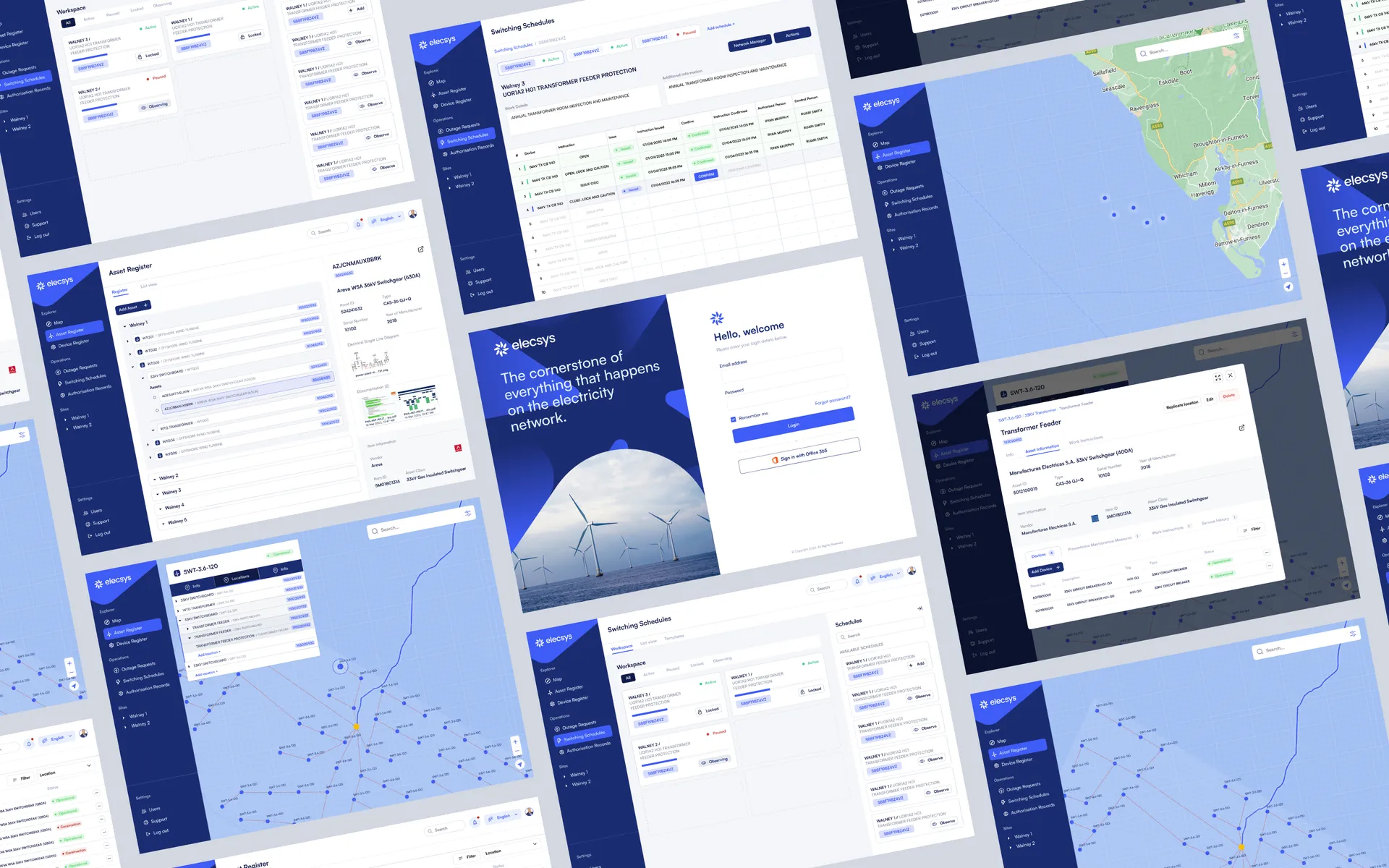
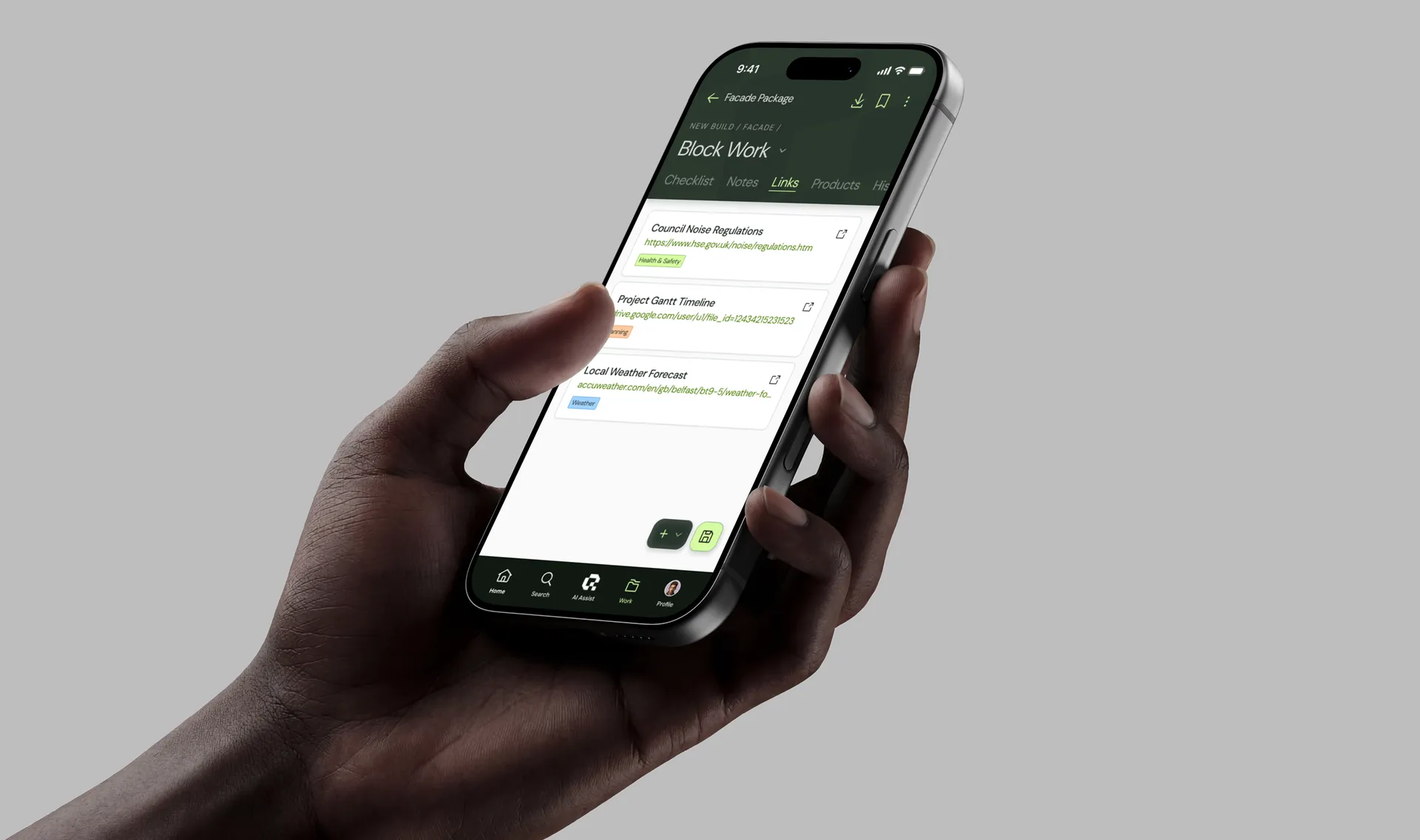
We've seen this work across a range of SME-scale projects. With Elecsys, we built a platform to redefine electricity network management for the renewable sector. With Specifi, we delivered a product specification tool serving a specialist industry need. With Juice Jar, the build was shaped around the team's actual daily operations. Each started with a focused scope and grew from there.
What are realistic timelines and budgets for an SME-sized project?
We won't pretend there's a single number that covers every project. But here are honest ranges.
A focused MVP with core workflows, basic integrations and user authentication typically takes 8 to 16 weeks to deliver. More complex compliance requirements, multiple third-party integrations or sophisticated data models add time.
On budget, a simple MVP usually starts from low five figures. Mid-range SME projects with a handful of integrations, role-based access and a polished user interface commonly sit in the mid five- to low six-figure range.
The more useful number is total cost of ownership (TCO) over three years. When you compare the cumulative licence fees, workaround costs and lost productivity of off-the-shelf against the build cost, hosting and iterative improvements of custom software, the gap often closes or reverses entirely.
Common pricing models you'll encounter:
Fixed-price works well for a tightly scoped MVP where requirements are clear upfront.
Time-and-materials suits discovery phases and iterative builds where the scope evolves.
Retainers cover ongoing support, hosting and incremental improvements after launch.
We use milestone-based delivery with transparent change controls, so you always know what you're paying for and why. Our stack (C#/.NET Core back-ends, React front-ends, hosted on Microsoft Azure) is chosen for long-term maintainability, not novelty.
Next steps: a free process audit
If you're running an SME and suspect your team is spending too much time working around software rather than with it, a process audit is a practical starting point. We'll map your current workflows, identify where purpose-built tooling would deliver the most value and give you a realistic scope, budget and three-year TCO estimate.
No obligation, no hard sell. Just a clear picture of whether building something tailored makes financial sense for your business.
Get in touch to book a free process audit and we'll take it from there.
Frequently asked questions
How much does custom software for SMEs typically cost?
Costs vary by scope. A simple MVP usually starts from low five figures, while mid-range SME projects commonly sit in the mid five- to low six-figure range. Total cost depends on integrations, compliance needs and ongoing support. Ask for a scoped MVP quote and a three-year total cost of ownership estimate.
Can SMEs afford bespoke software instead of off-the-shelf tools?
Yes. An MVP-first build reduces upfront risk and cost. When you factor in lost productivity, per-seat licence fees and the process changes forced by generic tools, custom software often pays back within 12 to 36 months for growth-focused SMEs.
How long does it take to deliver an SME MVP?
Typical MVP timelines are 8 to 16 weeks for a focused scope covering core workflows, basic integrations and user authentication. More complex integrations or compliance requirements add time. Iterative sprints and a clear priority list keep timelines predictable.
Will custom software integrate with our existing tools?
Good custom builds prioritise integrations through APIs, connectors and middleware. During discovery we map your toolstack and confirm technical constraints so the MVP includes the most business-critical integrations first.
What pricing models should SMEs expect from a development partner?
Common models include fixed-price for well-scoped MVPs, time-and-materials for discovery and iterative builds, and retainers for ongoing support. Choose a partner that provides scope discipline and transparent change controls so you always know what you're paying for.