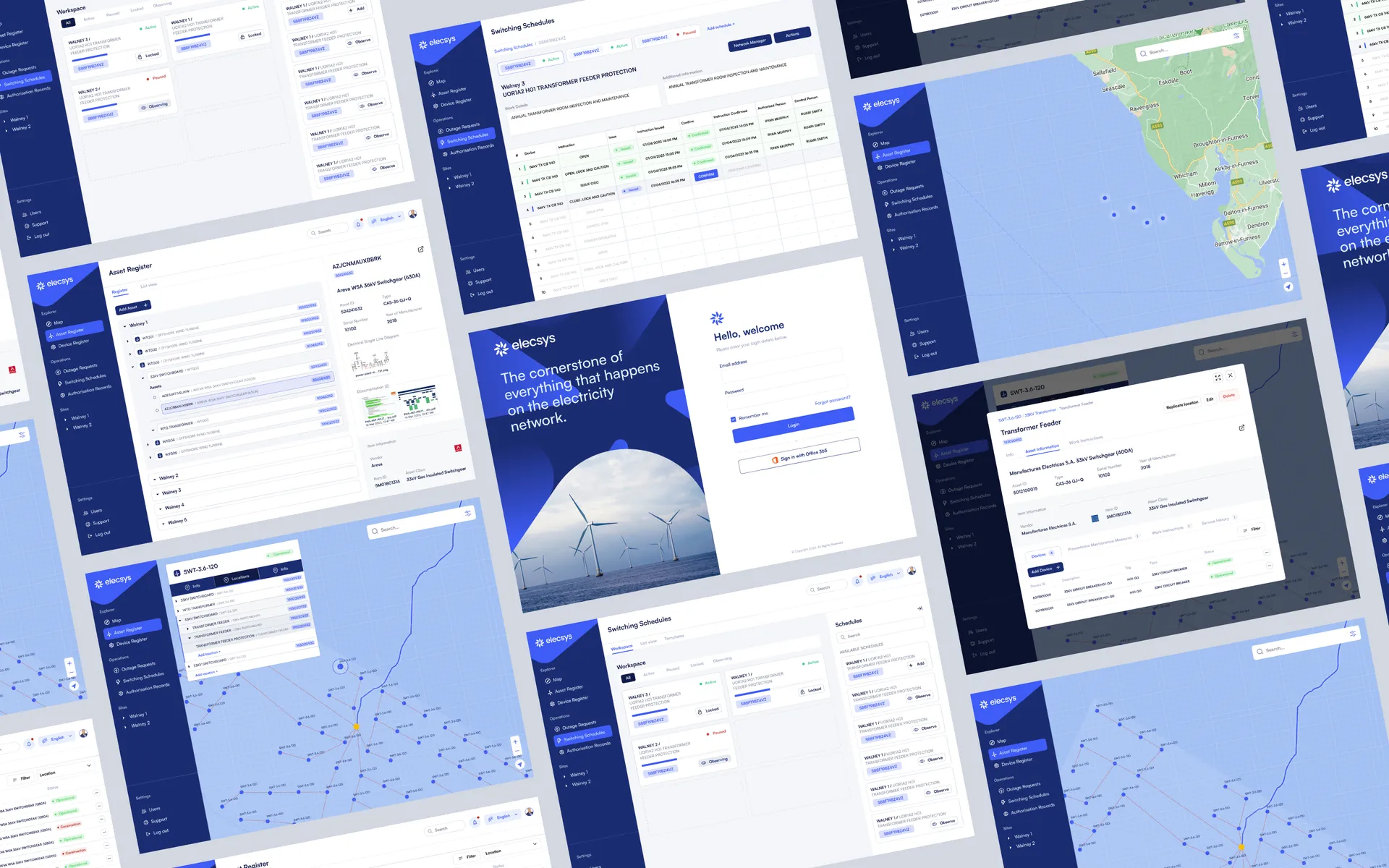
We uncover the pivotal role of custom software in unifying disparate business systems to grasp your business's true potential.
The business landscape is changing all the time. Disjointed systems quickly adopted as a result of rapidly developing technology often result in processes that don’t run smoothly, with manual compromises slowing down workflows. Lack of communication between systems leads to data silos where errors are lost, and opportunities missed.
When faced with a cloud of chaotic interlinked systems that just don’t communicate with one another, what’s the solution? A custom-developed software platform that connects your systems, or better yet replaces all of them, is the secret to shaking off the tedium.

What is the problem with disconnected business systems?
Where staff must manage multiple systems, there will always be hiccups due to miscommunication (between people or digital platforms). This has a knock-on effect on all business operations as things run more slowly, and mistakes are more likely.
Imagine an eCommerce business being dragged down by miscommunications across systems. Inventories don’t communicate with sales, so there are understocking issues. Enquiries on the app don’t align with email and website contact forms, resulting in lost queries and irritated customers repeating their complaints. The lack of any uniform communication channel leads to inconsistencies that are difficult to predict, resulting in:
Incorrect data and limited data visibility
Delayed decision making
Poor customer experience
Inflated operational costs
The Cost of Non-Integrated Systems
The cost of non-integrated systems that fail to work together can be invisible until it’s too late, leading even the most resilient of businesses to take a financial hit that could have been easily avoided. An example of this happening in the real world is Hershey’s ERP failure.
In 1999, chocolate manufacturer Hershey’s was required to deliver $100 million worth of Hershey’s Kisses for Halloween. These orders became stuck and lost in a system that failed to implement three disparate tools within their ERP system: SAP, Siebel CRM, and Manugistics. As a result, Hershey’s not only failed to complete the orders and missed out on a huge amount of annual revenue, their stock price plummeted, and the brand’s reliable reputation with clients and stakeholders was impacted.
How does system connectivity create operational fluency?
The costs of non-integrated systems to businesses are wide-ranging. But they could be easily avoided and help propel businesses forward. Here are some common examples of the impact of a unified system.
Type of Cost | Details |
Software Maintenance | Unified systems lead to reduced maintenance (fewer platforms and tools used means fewer errors). Developers only need to be familiar with one system, making fixing easier and less costly. |
Labour | Tasks are streamlined and combined taking less time, team productivity is enhanced, and staff are happier.. |
Downtime Impact | A more stable and consistent data flow minimises operational downtime. |
Training | Learning and adapting to one system as opposed to several makes training easier. |
Data management | Optimised data flow and management lead to reduced additional resources and costs. |
Customer satisfaction | Customer experiences are enhanced thanks to a more attentive, faster, and personalised service. |
Inventory management | Inventories are fully visible and easily managed. Errors can be anticipated and intercepted to reduce over and under-stocking issues. |

How does custom software unify your business systems?
How can custom software development be the solution that fixes all your challenges regarding myriad differing systems? By its very nature, a custom solution seeks to unify all your systems under one roof into a digital process that works just how you need it to. Read on for five ways a bespoke software solution does this.
1. Addressing Unique Business Needs
By tailoring it to your specific needs, a developer can create a piece of custom software that answers seamlessly to all operational needs. This includes coherent data flows, enhanced decision-making, and optimising workflows. From data handling to user interfaces, one of the primary benefits of custom software development is that it aligns with your business, however unique and niche it is.
2. Bridging Gaps with Ease
Robust interlinking with varied systems allows for data synchronisation so that none is ever missed or misinterpreted against other data sets. Customer relationship management, enterprise resource planning, inventory control, and finances are all impacted by centralising data and processes, making collaboration between departments and over tasks smoother and more efficient.
3. Measurable Data and Opportunities
Data collection and analysis are essential for structured and results-backed business growth. Employing a centralised, unified system for enhanced decision-making in business can propel it forward much faster than contrasting systems with non-communicative data sets. Highly accurate trends and insights are made thanks to merging data streams that interplay with one another. Decisions can be reactively made and opportunities seized.
4. Staying Ahead of the Technological Curve
Maintaining interconnected systems sets your business up for a strong future market position. When emerging trends can be easily integrated, you can stay technologically relevant on all levels when scaling your business. Every aspect of business benefits from a bespoke-made system that is built for quick and easy adaptation, incorporating new technologies and innovations. This is effective not only in the system but responsively to the business and market, too, in the flexible future of business where adaptation is vital.
5. Prioritising Data Security in Connectivity
Prioritising the centralisation of data has an enormous impact on safety and compliance. From this wide and clear view of your entire business, all areas of sensitive information are protected under one consistent roof—security explicitly built for the threats and weak points unique to your business. Nothing falls out of the eye’s reach where potential data breaches could be a hazard not seen.
It may be time for you to assess your business system structure as a whole. Do you feel that there are aspects of business that fail to communicate? Your business could be missing out on fantastic opportunities for growth and development simply because of a few outdated systems. Talk to us about creating a unified, bespoke software solution that allows your business to thrive in its total potential.
Frequently asked questions
What are the hidden costs of non-integrated systems?
When systems fail to work together, the cost can stay invisible until it is too late. Staff juggling multiple platforms make more mistakes and work more slowly, data is incorrect or hard to see, decisions are delayed, customers get a poorer experience and operational costs rise, all of which can be avoided with a connected system.
What happened in the Hershey''s ERP failure?
In 1999 Hershey's needed to deliver $100 million of Kisses for Halloween, but orders became stuck in a system that failed to integrate three separate tools, SAP, Siebel CRM and Manugistics. The company missed the orders, lost a large amount of annual revenue, saw its stock price fall and damaged its reputation with clients and stakeholders.
How does a unified system reduce operating costs?
Fewer platforms mean fewer errors and less maintenance, and developers only need to know one system. Tasks are streamlined so labour takes less time, staff learn one tool instead of several, a stable data flow reduces downtime, and inventories become fully visible so over-stocking and under-stocking can be anticipated and intercepted.
Does connecting business systems improve data security?
Yes. Centralising data gives a wide and clear view of the entire business, so all areas of sensitive information sit under one consistent layer of protection. Security can be built explicitly for the threats and weak points unique to your business, and potential breach points are far less likely to go unnoticed.